Commercial · Haldimand County
Panic & Exit Hardware
Someone at the front counter always has to unlock the side door by hand before the lunch rush, because the round doorknob out there was never meant to be an exit for a room this size.
Panic & Exit Hardware
In plain words
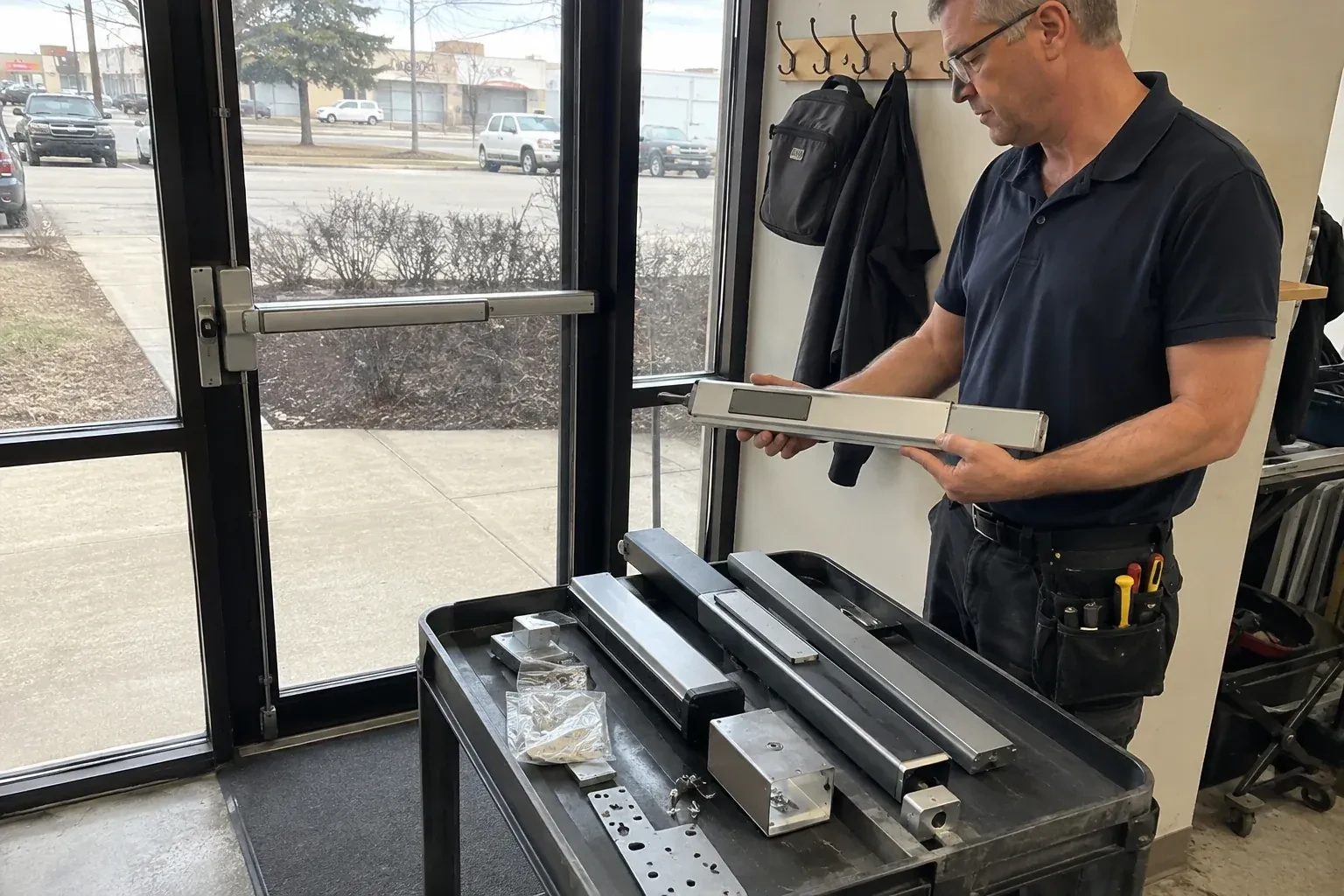
Electrified exit hardware adds a layer without changing the basic behaviour of the door: a person inside can still leave under one motion of the hand, every time. A request-to-exit switch tells an access-control panel that the pushpad or crossbar was actuated, usually paired with a door-position contact so the panel can also tell a normal exit from a forced or propped door. Electric latch retraction lets a fire-rated opening behave like a push-pull door for staff, provided it relatches automatically on a fire-alarm signal, since that kind of door never carries a mechanical dogging function. An alarm module sounds when the device is used.
How the visit goesThe crossbar on the loading-dock door barely returns anymore. Someone has to lean into it with a shoulder, and twice this month it has stuck half-latched, propped by whatever was nearest.
Haldimand County
How the visit goes
Reading the door itself
Every opening gets the same close look: whether it is fire-rated, which way it swings, how wide it is, and what preparation, if any, already exists in the door and frame from earlier hardware. A hollow-metal fire door takes a different device than a wood door in a non-rated partition, and a narrow-stile aluminum storefront door narrows the choice of device further still. Reading this correctly before anything is ordered is what keeps the installation from turning into a second visit once the wrong device arrives and does not fit the preparation already in the door.
Fitting outside trim that still controls entry
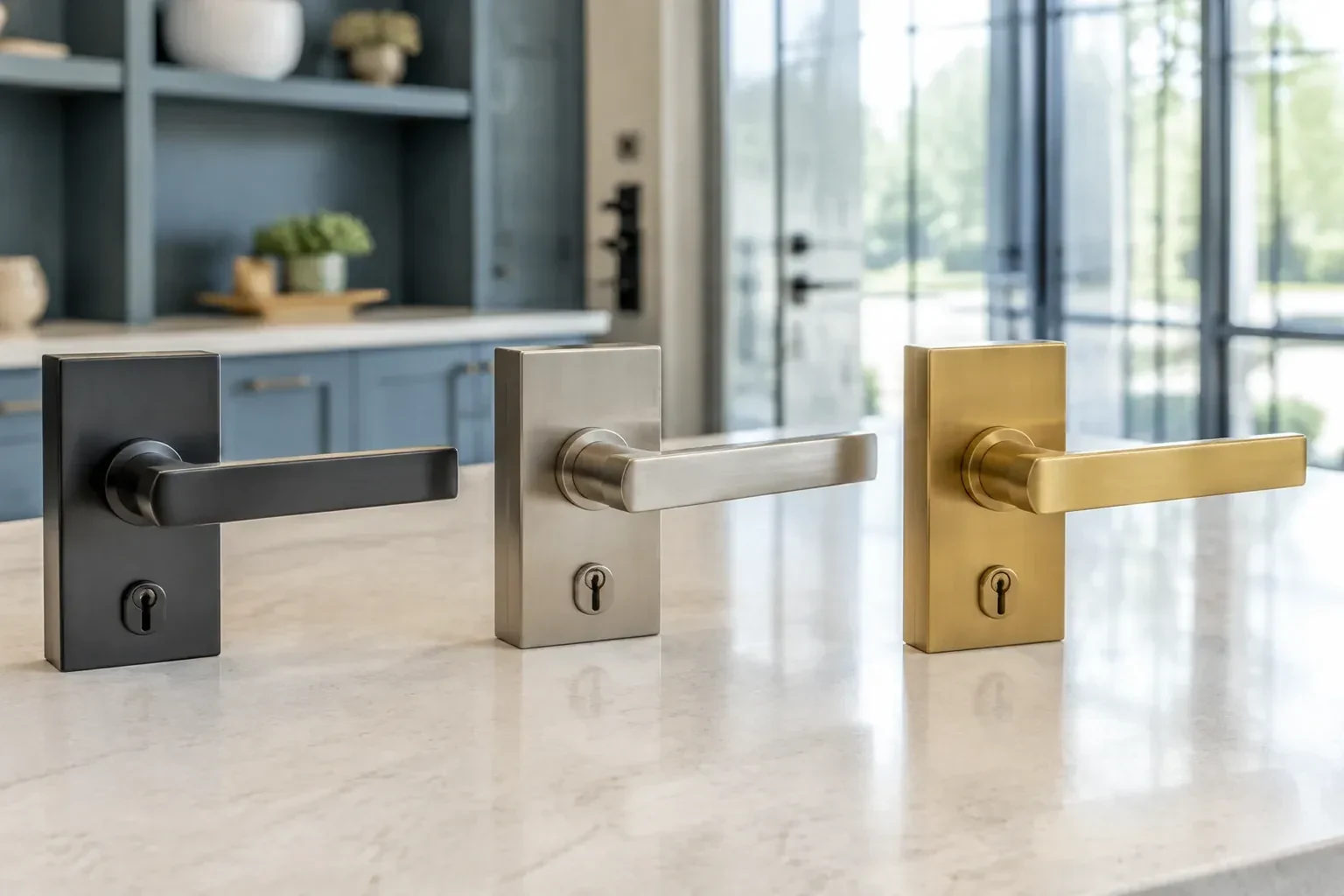
The inside of the door stays simple: push to leave, every time. The outside gets whatever lets the right people in, a plain pull for a door nobody needs to unlock from outside, a lever with a key cylinder for staff entry, or a keyed cylinder alone where entry is occasional. Whichever trim is chosen, it operates entirely independently of the inside crossbar, so locking the outside never has any effect on a person's ability to leave from within.
Electrified functions folded into the building's other systems
Any request-to-exit signal, latch retraction or alarm added during the visit now does its own specific job rather than one combined function: an alarm module can sound locally on its own power the moment the crossbar is used, latch retraction lets an authorized signal release the latch for entry, and a request-to-exit signal tells the access-control panel that the pushpad was actuated. None of them alone proves who passed through or from which side, and the exit function itself remains entirely mechanical underneath, so a power interruption still leaves the door able to be pushed open by hand from the inside.
Panic & Exit Hardware
In the van
- Strike and reinforcement
- Installation template and jig
- Signage and labels
- Request-to-exit switch
- Astragal and mullion hardware
What affects the quote
Same fees day, night or weekend
1Door and frame condition
A door that has sagged, a frame that has shifted, or a strike pocket that no longer lines up needs correcting before hardware is fitted, which adds its own line to the quote.
2Single door or a pair
A pair of doors that needs ordered closing calls for a coordinator or an astragal, and one being converted into a single wide exit needs a mullion removed and replaced with vertical-rod devices on each leaf, both of which add work beyond a single-door installation.
3Removing hardware that should not remain
A padlock, hasp or extra deadbolt found on the door is removed and the resulting holes are filled or covered as part of the same visit, which is its own small task in the quote.
Panic & Exit Hardware: questions
Can one visit cover several doors in the same building?
Yes, and it is common. A building rarely has only one exit affected by an occupant-load or fire-rating question; stairway doors, assembly-room exits and any doors altered together during a renovation are usually assessed and fitted in the same visit, with one written record covering every device installed across the building.
Can a padlock or extra deadbolt stay on a door that has this hardware?
No additional fastening should stay on an exit door that does not release the same way the primary device does. A hasp, padlock or separate deadbolt added at some point for extra security is a common finding on an older door, and removing or replacing it with something that releases under the same push is part of bringing that opening back to a single, reliable exit.
Is delayed-egress hardware allowed here?
Delayed-egress locking has a defined place in the codes that cover it, generally paired with sprinkler protection and a fire alarm system, and it is not a way to lock a door indefinitely; a short delay still releases on its own once the push is held, and always releases as soon as a fire alarm signal arrives. Whether it suits a given opening depends on the occupancy and the authority having jurisdiction, so it is confirmed with them before it is specified.
Commercial Locks
- Master Key System DesignAfter a busy shift the manager counts the keys coming back in and loses track of who still has one.
- Access Control InstallationThe team has grown past the point where one shared key still makes sense.
- Commercial-Grade Lock ReplacementA new tenant moved into the unit next door, and the property manager just found three different…
Panic & Exit Hardware near you
Below, each lock and key service we offer in Haldimand County gets its own page, with a description that assumes no prior knowledge. Start anywhere. Many customers arrive for a lockout and leave knowing exactly why the strike plate on the back door has bothered them for years.