Commercial · Canfield
Commercial Rekeying in Canfield
The office has been reshuffled twice since the locks were last touched. Reception can open the server room, the warehouse crew has a key to accounting, and the chart that once explained who could open what has not been seen since the move.
Commercial Rekeying
In plain words
A commercial rekey is planned around the trading day. The locksmith agrees a window, often after close or before opening, and works door by door so the premises is never left without a locking entrance. Cylinders come out, are repinned at a bench in the van or on a counter, and go back in; interchangeable cores are simply swapped for freshly combinated ones. Each door is tried with both new and old keys before the next is started. New keys go to whoever opens up in the morning, and a written chart of doors and key groups stays with the manager.
How the visit goesA break-in overnight took the cash float and a staff member's bag with her work keys inside it. The glass is being replaced this morning, but the key that opened the door yesterday will still open it tonight unless the cylinders are changed.
Canfield
How the visit goes
Who is entitled to order the change
Every commercial rekey starts by confirming that the person asking for it has the standing to do so. For a small business that is usually the owner or a director; for a larger one, a facilities manager or property manager acting under written authority. The lease matters here too, because it decides which doors are the tenant's to alter and which remain the landlord's, and many leases ask that the landlord be given a key or told when locks change. Getting this straight before any cylinder comes out protects the business, its neighbours in the building and the locksmith, and it means the finished keying chart lands in the right hands.
Repinning a standard cylinder
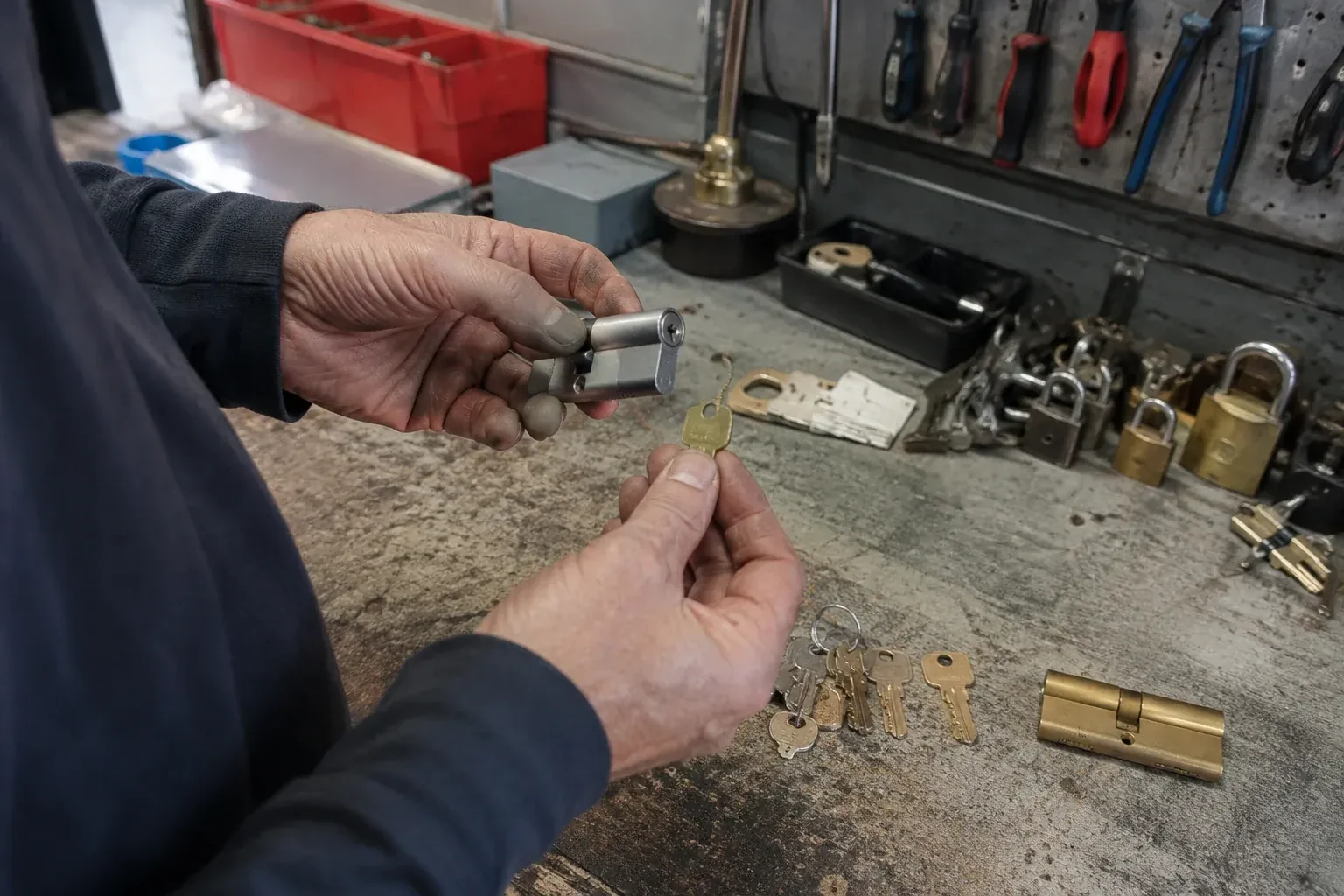
The cylinder is taken off the door and its plug is slid out with a follower, a small tube that holds the top pins and springs in place so nothing scatters. The old bottom pins are tipped out, and a new combination is chosen from the pinning records so it does not collide with any other key in the plan. Fresh pins of the matching depths are dropped into each chamber, the plug goes back in, and the new key is tried: it should turn as smoothly as if the lock were new, and the old key should stop dead. The cylinder is then refitted and adjusted so the cam or tailpiece throws the bolt fully.
Adding a door without starting over
The pinning records kept from the visit mean the system can grow. When the business takes the unit next door, adds a storage cage or replaces a worn lever set, the new cylinder is pinned into an unused combination on the existing chart and handed a key from the right group, and nobody already carrying a key notices anything changed. That is the value of leaving reserve combinations in a master system rather than using them all up on day one. Keep the locksmith's reference number for the system with the chart, mention it when you call, and a single new door becomes a short visit instead of a fresh plan.
Commercial Rekeying
In the van
- Dry graphite or PTFE lubricant
- Commercial pin kit
- Key stamp set and tags
- Interchangeable cores and control key
- Key gauge and decoder
What affects the quote
Same fees day, night or weekend
1Number of cylinders
The count of openings drives the quote more than anything else: each cylinder is removed, repinned, refitted and tested individually, so a three-door shop and a twelve-office suite are very different jobs.
2Distance to the premises
Travel to the site is part of the call-out, and a unit in a downtown plaza and one at the end of a rural industrial road are different trips.
3How many keys are cut
Each key cut to code and stamped is counted into the quote. Two per door group for a small shop and forty for a warehouse shift are different numbers.
Commercial Rekeying: questions
Do I need my landlord's consent before rekeying my unit?
Read the lease, because that is where the answer lives. Commercial tenancies are governed mostly by the lease itself, and many leases require the tenant to tell the landlord when locks change, to provide a key for emergencies, or to use the landlord's approved locksmith. Doors on the building's master system, such as corridor or service doors, are normally the landlord's to change. Bring the lease to the assessment and the locksmith will sort the doors accordingly.
We are a landlord with a tenant leaving. When should the unit be rekeyed?
Between tenants is the ideal moment: the departing tenant has handed back their keys, the new one has not yet received any, and the unit is empty for the work. The incoming tenant then starts on keys nobody else has held, and the landlord's own master or emergency key is set up at the same time. Where a lease has ended in dispute, the locksmith asks to see the paperwork before changing locks on a unit that still holds a tenant's goods.
Should we rekey every time an employee leaves?
Rekey when a key has not come back or when the departure was unfriendly; when a key is returned and the register confirms it, the cylinders it opened are as secure as before. Businesses that want a response to every departure without a visit each time fit interchangeable cores and swap them in-house. Whatever the trigger, dealing with only the cylinders that key opened keeps the response proportionate.
Commercial Locks
- Access Control InstallationThe team has grown past the point where one shared key still makes sense.
- Panic & Exit HardwareSomeone at the front counter always has to unlock the side door by hand before the lunch rush…
- Commercial-Grade Lock ReplacementA new tenant moved into the unit next door, and the property manager just found three different…
Commercial Rekeying near you
The lock services below are the ones people in Canfield ask for by name: get me back in, change the locks, rekey the house, put a deadbolt on this door, sort out the shop, open the safe. Each page answers the questions that usually come next, and the technician answers the rest at the door.